K

Peptide Research

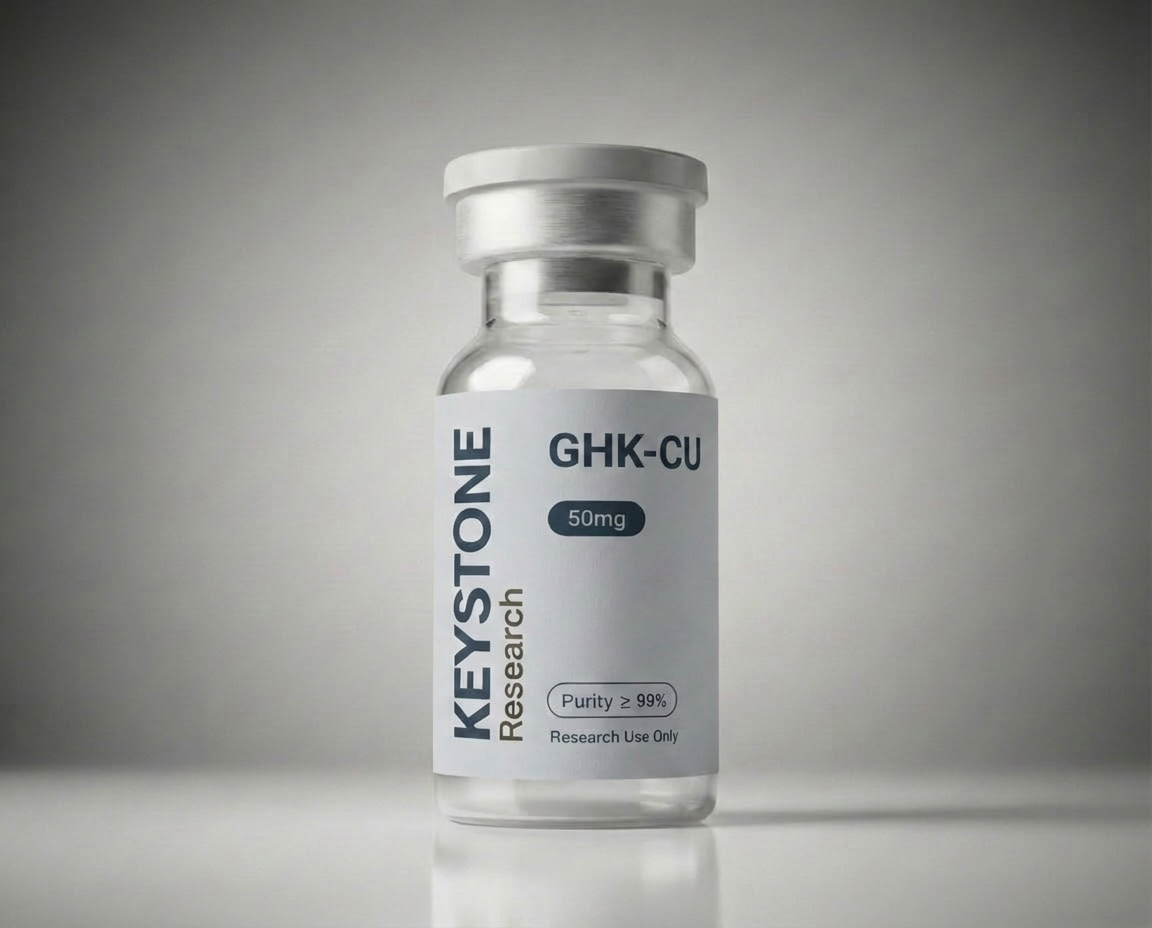
GHK-CU

SKU: GHK-50

GHK-Cu (Glycyl-L-Histidyl-L-Lysine : Cu²⁺) is a naturally occurring tripeptide that binds copper with high affinity. The peptide is studied in vitro for its role in extracellular-matrix remodeling, redox regulation, and gene-expression modulation; its copper-binding chemistry is

View Catalog →For Research Use Only
GHK-CU

Mechanism of Action

GHK-Cu (Glycyl-L-Histidyl-L-Lysine : Cu²⁺) is a naturally occurring tripeptide that binds copper with high affinity. The peptide is studied in vitro for its role in extracellular-matrix remodeling, redox regulation, and gene-expression modulation; its copper-binding chemistry is the central pharmacophore.

Research Studies

10 peer-reviewed studies curated for GHK-CU.

Human Studies3

Human2018PMID: 29986520

Regenerative and Protective Actions of the GHK-Cu Peptide in the Light of the New Gene Data.

Pickart L, Margolina A

International journal of molecular sciences

This abstract synthesizes current knowledge regarding the human GHK-Cu peptide's regenerative and protective biological actions. It integrates existing understanding with recent genetic data to elucidate the molecular mechanisms underlying its diverse effects. The review focuses on the peptide's activity within human biological systems, including various human tissues and cell types like dermal fibroblasts and COPD fibroblasts.

The peptide GHK-Cu is identified as possessing numerous health-positive actions. These include stimulating blood vessel and nerve outgrowth, enhancing the synthesis of collagen, elastin, and glycosaminoglycans, and supporting dermal fibroblast function. Furthermore, GHK-Cu exhibits significant cell protective properties, such as anti-cancer and anti-inflammatory activities, lung protection, restoration of COPD fibroblasts, suppression of aging-related molecules like NFκB, DNA repair, and activation of the proteasome system for cell cleansing. These varied healing and protective actions are explained by GHK-Cu's regulation of multiple biochemical pathways, as revealed by new genetic insights.

View on PubMed
Human2020PMID: 35083444

The potential of GHK as an anti-aging peptide.

Dou Y, Lee A, Zhu L, Morton J, Ladiges W

Aging pathobiology and therapeutics

This abstract synthesizes existing research on GHK and GHK-Cu, focusing on its potential role as an anti-aging peptide. It compiles evidence from various sources, including human serum data, in vitro studies, in vivo studies, and preliminary observations in aging mice. This comprehensive review aims to establish a rationale for further investigation into GHK within preclinical and clinical aging research contexts.

Naturally occurring GHK levels in human serum significantly decrease with age, falling from an average of 200 ng/ml at age 20 to 80 ng/ml by age 60. Both GHK and its copper chelate, GHK-Cu, demonstrate anti-inflammatory and tissue remodeling properties. GHK-Cu has been shown to promote skin remodeling, wound healing, and regeneration, along with exhibiting prominent antioxidant and anti-inflammatory effects across various experimental models, including preliminary findings in aging mice suggesting a partial reversal of cognitive impairment.

View on PubMed

Animal Studies2

In Vitro Studies1

In Vitro2023PMID: 37896245

Liposomes as Carriers of GHK-Cu Tripeptide for Cosmetic Application.

Dymek M, Olechowska K, Hąc-Wydro K, Sikora E

Pharmaceutics

This in vitro study explored liposomes as potential carriers for the anti-aging and wound-healing peptide, GHK-Cu. Anionic and cationic hydrogenated lecithin-based liposomes were prepared using a thin-film hydration method, combined with freeze-thaw cycles and extrusion. The investigation focused on how lipid content, composition, and GHK-Cu concentration affected liposome physicochemical properties, lipid bilayer fluidity, and encapsulation efficiency.

Stable GHK-Cu-loaded liposome systems, approximately 100 nm in size, were successfully produced. Cationic liposomes exhibited greater bilayer fluidity, and optimal carriers were identified as 25 mg/cm3 cationic or anionic liposomes loaded with 0.5 mg/cm3 GHK-Cu, achieving encapsulation efficiencies of 31.7% and 20.0%, respectively. While GHK-Cu did not significantly alter tyrosinase activity in these in vitro assays, it resulted in 48.90% elastase inhibition, suggesting a potential role in mitigating elastin degradation.

View on PubMed

Reviews & Meta-Analyses4

Review2025PMID: 39963574

Topically applied GHK as an anti-wrinkle peptide: Advantages, problems and prospective.

Mortazavi SM, Mohammadi Vadoud SA, Moghimi HR

BioImpacts : BI

This review evaluated the potential of glycyl-histidyl-lysine peptide (GHK) and its derivatives, GHK-Cu and Pal-GHK, as topical anti-wrinkle agents. It aimed to determine their effectiveness in wrinkle prevention or reduction and assess their skin permeability. The review synthesized information from existing literature, primarily drawing conclusions about efficacy from cellular studies and examining various skin permeation enhancement methods.

Based on cellular studies, GHK demonstrates potential as an anti-wrinkle ingredient. Although GHK-Cu and Pal-GHK are considered effective and relatively skin permeable, there is a notable absence of clinical studies directly involving these specific derivatives. Permeation can be successfully increased through methods like metal complexation, chemical modification with hydrophobic moieties, incorporating cell-penetrating peptides, and potentially microneedle pretreatment, which helps overcome challenges associated with their hydrophilic and unstable nature.

View on PubMed
Review2015PMID: 26236730

GHK Peptide as a Natural Modulator of Multiple Cellular Pathways in Skin Regeneration.

Pickart L, Vasquez-Soltero JM, Margolina A

BioMed research international

This peer-reviewed abstract describes a literature review investigating GHK's multifaceted role in skin regeneration. It synthesizes findings from in vitro studies, animal models including dogs, rats, mice, and pigs, and observations from human cosmetic applications. The review focuses on how GHK, often complexed with copper, influences various cellular pathways relevant to tissue repair.

GHK, particularly when complexed with copper, is found to accelerate wound healing and skin repair across different tissues and species. It modulates both the synthesis and breakdown of collagen and glycosaminoglycans, stimulates specific matrix components like decorin, and influences metalloproteinase activity. Mechanistically, it restores fibroblast vitality, attracts immune and endothelial cells, and can up- or downregulate approximately 4,000 human genes, suggesting a broad impact on cellular health and regenerative processes.

View on PubMed
Review2026PMID: 41476424

Injectable Peptide Therapy: A Primer for Orthopaedic and Sports Medicine Physicians.

Mayfield CK, Bolia IK, Feingold CL, Lin EH, Liu JN, Rick Hatch GF

The American journal of sports medicine

This narrative review aimed to evaluate the current evidence and applications of injectable peptide therapy, focusing on its potential in regenerative medicine and sports performance for orthopaedic providers. It involved a comprehensive literature search using PubMed to identify biochemical and clinical studies on popular injectable peptides. The review primarily assessed evidence from preclinical models, animal studies, and existing human trials or case series.

For GHK-Cu, the review identified promising findings in wound healing and anti-inflammatory effects from non-clinical data. However, it explicitly notes that no clinical data currently support its use for musculoskeletal conditions. This underscores a significant lack of evidence for GHK-Cu's clinical application, indicating that substantial research into its safety and efficacy is necessary before any definitive recommendations can be made.

View on PubMed
Review2026PMID: 41490200

Therapeutic Peptides in Orthopaedics: Applications, Challenges, and Future Directions.

Rahman OF, Lee SJ, Seeds WA

Journal of the American Academy of Orthopaedic Surgeons. Global research & reviews

This article is a review of therapeutic peptides in orthopaedics. It integrates current mechanistic insights with orthopaedic relevance, drawing primarily from existing preclinical studies. The review notes a current lack of clinical trials for these peptides.

Therapeutic peptides influence tissue regeneration, inflammation resolution, and neuromuscular recovery by modulating key signaling networks like PI3K/Akt, mTOR, and TGF-β. GHK-Cu is highlighted as a wound-healing peptide that promotes angiogenesis, integrin-mediated extracellular matrix remodeling, and fibroblast activation. While preclinical research shows promise for such peptides, further clinical investigation is needed to establish safety and efficacy.

View on PubMed

Related Research

Palmitoyl pentapeptide-4 (Matrixyl, pal-KTTKS): A lipopeptide studied for collagen synthesis and matrix remodeling in cultured fibroblasts. Acetyl hexapeptide-8 (Argireline): A SNAP-25-derived peptide studied for neuromodulator-release endpoints in cell models; frequently grouped with GHK-Cu in cosmetic-chemistry literature. BPC-157: A gastric-derived synthetic pentadecapeptide with a distinct mechanism, often studied in parallel for tissue-repair endpoints in rodent models. Thymosin β-4 (Tβ4): An actin-sequestering peptide studied alongside GHK-Cu for wound-healing endpoints in animal models.